

Roxbourne Park River Restoration
Update 11th March – River Works Completed
We’re pleased to confirm that the river restoration works at Roxbourne Park are now complete. The Environment Agency carried out a site inspection and confirmed they are satisfied with the completed works.
The project has delivered a series of natural river features designed to improve flow, habitat diversity, and overall river health. These changes will help create better conditions for fish, aquatic insects, and other wildlife, while also supporting a more resilient river channel.
For anyone interested in the details of the work, final maps of the project and a photo of each completed river feature can be viewed in the shared folder: LBHa, Roxbourne river works.
Restoration and Seeding Works
Following completion of the main construction works, teams have been working to tidy and restore areas affected during the project.
With the support of The Conservation Volunteers (TCV) and Friends of Roxbourne Park, riverbank areas downstream have been cleared, tidied, and seeded. Most sections of the park have now been treated, with the final areas scheduled to be completed next week.
The path near the culvert that experienced rutting during the works has been smoothed and reseeded. This was completed on 2nd March using a hard-wearing grass path mix, along with a low-growing grass and wildflower mix along the edges to help stabilise the ground and support biodiversity.
The path over the culvert is still a little muddy and wet in places. This is likely due to existing ground conditions rather than the construction works, and the area will continue to settle as the vegetation establishes.
Footpaths Along the Brook
Some sections of the lower path along the brook in the downstream half of the park are currently muddy, particularly near two of the new river features. In these locations there is an old sub-base beneath the path which can hold water after wet weather.
These areas will be monitored as the site continues to settle.
Next Steps
Further planting work will take place soon, with support from TCV and local volunteers. Planting dates will be confirmed shortly.
Over the coming months the newly created river features and seeded areas will gradually stabilise and become vegetated, helping the river corridor develop into a richer habitat for wildlife and a more natural landscape for park users.
Update 17th February - Works Progressing Well
We’re pleased to share that the contractor has now completed most of the restoration works in the upstream half of the park.
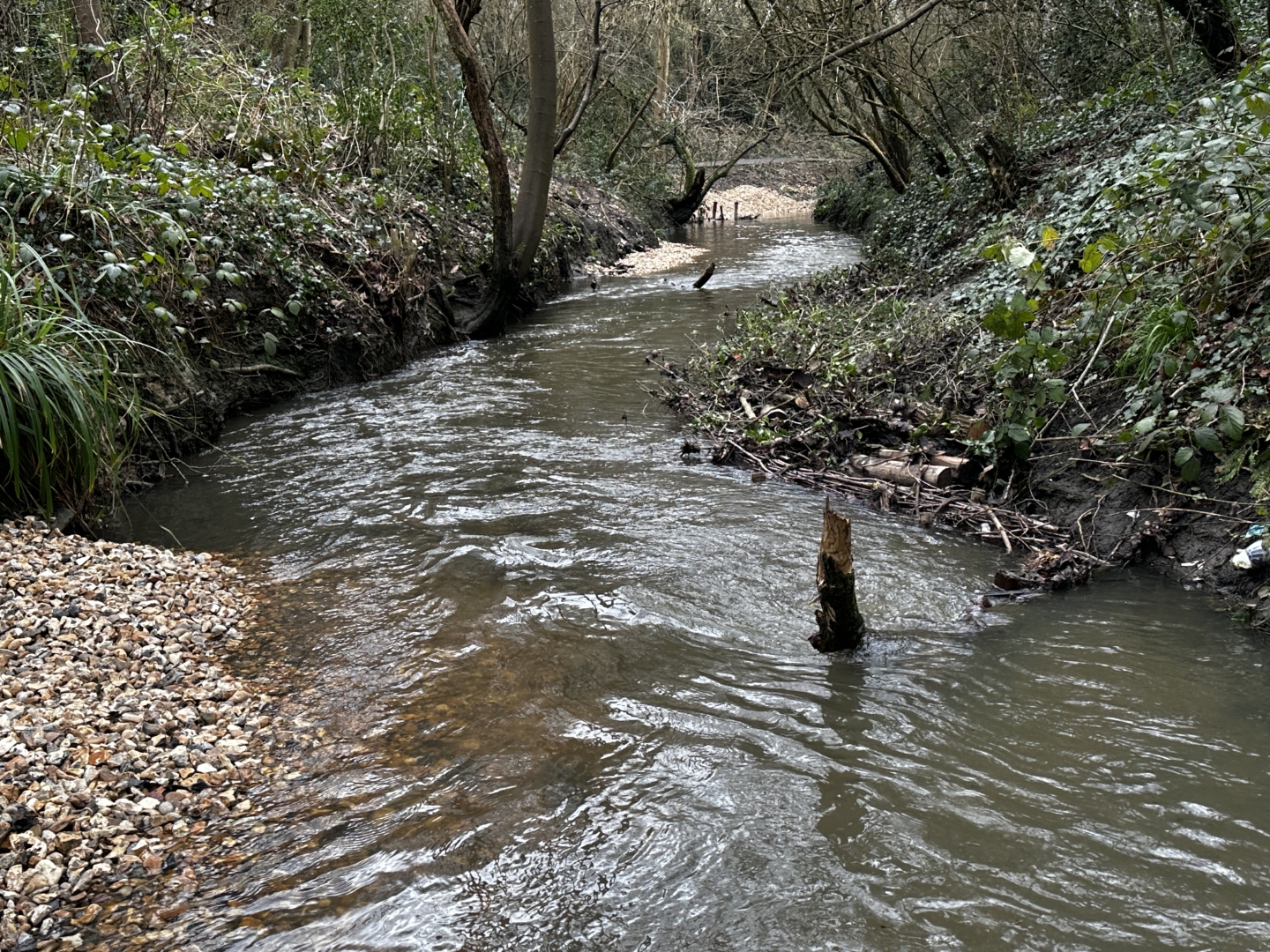
New gravel and brash berms have been installed to help the river flow in a more natural, winding pattern. This gentle reshaping of the channel slightly narrows the river in places, encouraging faster flows that naturally clear away built-up silt from the riverbed. This process improves conditions for fish and other wildlife. The silt will settle into the berms and calmer areas of the river, where it will gradually stabilise and become vegetated over time.
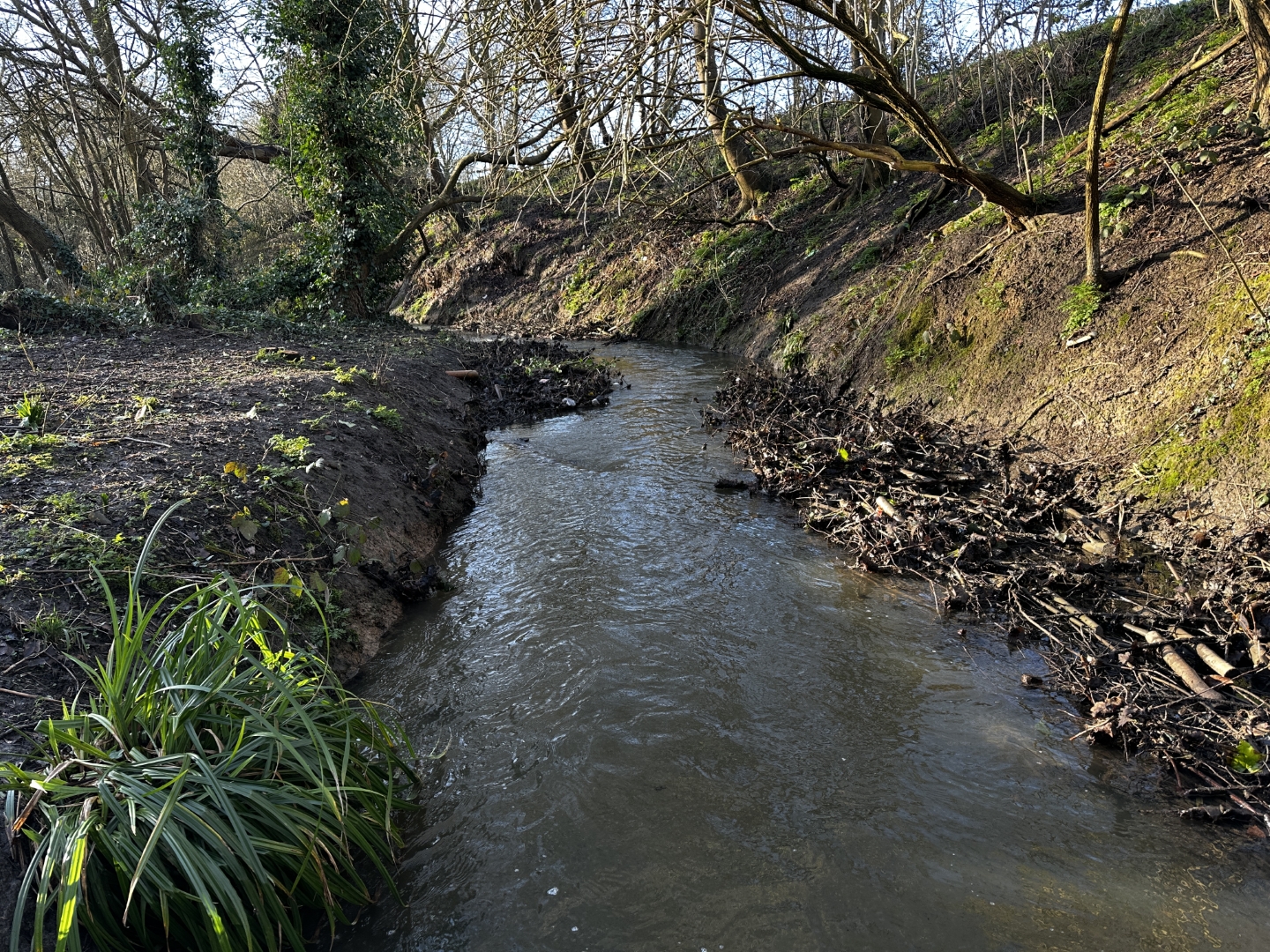
Each berm also includes a carefully placed log deflector at its upstream end. These features create a mix of deeper and shallower water, providing valuable microhabitats for fish, insects, and other aquatic species.
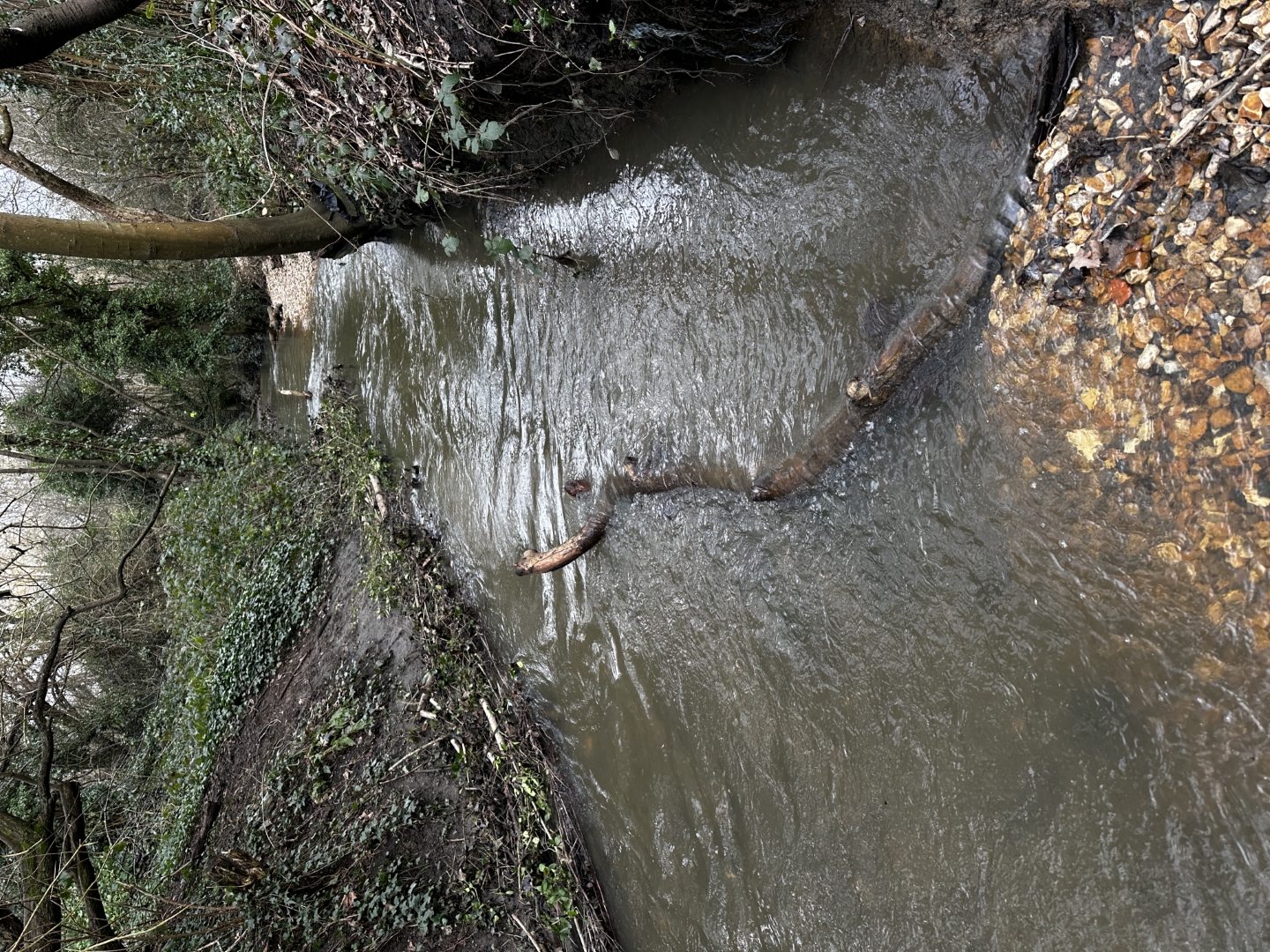
To further support the river’s health, a small number of trees have been coppiced. This allows more sunlight to reach the water, which benefits aquatic plants and overall biodiversity.
Work is already underway to restore areas of the riverbank affected during construction. This effort is being supported by The Conservation Volunteers (TCV) and local volunteers. In the coming weeks, these areas will be seeded and planted to help them recover quickly. Volunteers have also begun opening up sections of the banks along Smart’s Brook, which joins the main river from the direction of Waverley Road. Additionally, grass areas near the culvert that experienced rutting will be repaired and reseeded.
What’s happening next
By Friday 20th, works will move into the downstream half of the park, beginning in the area opposite the allotments.
We’re also happy to confirm that the surfaced path on the eastern bank will reopen by the end of the week, and the contractor’s compound will be relocated from Cannon Lane car park.
Thank you to everyone for your patience and support while these important improvements are carried out. These works will help create a healthier, more resilient river and park environment for wildlife and the community to enjoy for years to come.
Overview
This winter, works will begin to enhance the river channel and banks of the Yeading Brook as it passes through Roxbourne Park. The project aims to re-naturalise the river, improve its ecological condition, and strengthen its role in the surrounding landscape and park environment.
These works are part of Yeading Brook Unbound, a wider multi-partner programme restoring 3.5km of the Yeading Brook West from Headstone Manor to Roxbourne Park. The overall project vision document is publicly available on the Crane Valley Partnership website.
Funding for the Roxbourne Park scheme is provided by the Mayor of London’s Rewild London Fund and by the Crane Valley Project Fund, which is supported by Thames Water and managed by the Crane Valley Partnership.
Why This Work Is Needed
At present, the river through Roxbourne Park is confined between steep banks and has been historically over-deepened. This has reduced natural interaction between the river and its banks. In several locations the banks have been reinforced with concrete, wooden boarding and tyres, and some stretches are straight and uniform with little variation in flow or habitat.
Light levels are low in places due to dense tree cover, which has limited the growth of marginal vegetation. Improving the river’s structure, light levels and flow diversity will support wildlife and create a healthier river corridor within the park.
Planned Works
Over the past 18 months, a detailed design has been prepared and approved by the Environment Agency. The work will include:
Selective removal of some trees and scrub to increase light levels without reducing the overall character of the riverside tree line.
Installation of gravel berms, large woody deflectors and other natural materials along channel edges to create flow variation and promote a more sinuous path.
Removal of artificial bank reinforcements where appropriate, with more natural protection used where erosion is a concern.
Regrading of short bank sections to reduce steepness and improve connectivity between the river and its banks.
Removal of bricks and other artificial material from the riverbed and introduction of mixed gravels to help form natural features such as riffles and pools.
Creation of a new pond near the western end of the allotments.
Installation of an artificial kingfisher nesting bank.
Spring seeding and planting of banks and margins with native species.
Installation of two interpretation panels to inform visitors about the works and their benefits.
Timeline and Delivery
Works are expected to begin in late January or early February and continue for approximately six to eight weeks. In April, attention will shift to seeding and planting the riverbanks. Work will be phased to minimise disruption, although temporary vehicle movements or short-term path closures may be necessary.
The broader Yeading Brook Unbound project is managed by the Council’s Climate Change and Natural Resources Team. Delivery at Roxbourne Park will be led by Aquamaintain, a specialist river contractor, supported by officers from the Parks and Flood Risk teams. The Environment Agency will visit the site regularly to monitor progress.
Some works at the southern end of the park will take place on the eastern bank within Field End Recreation Ground, managed by the London Borough of Hillingdon. These proposals have been approved by Hillingdon and coordination will take place throughout.
Impact on Park Users
During the construction phase, some areas of the park may be temporarily disrupted. This could include:
Short-term closures of sections of footpaths
Vehicle movements associated with construction activity
Every effort will be made to minimise inconvenience. Path closures will only be put in place where necessary and for the shortest required duration. The wider park will remain accessible throughout and disruption will be kept to a minimum.
Information posters will be placed on-site before and during the works to explain the project and help park visitors understand what is happening and why. These will include details of the timing, nature and purpose of the works, and direct people to further information if they want to learn more.
Community and Volunteering
The Council is working with the Friends of Roxbourne Park to share project information with the community. Project details will also be available through MyHarrow Talk.
The Conservation Volunteers (TCV) will run volunteer sessions offering opportunities to support river restoration activities. Tasks will include removing wooden toe boarding, adjusting a short section of riverside path to allow bank restoration, and helping to plant riverbanks and margins.
